


In 2026, Trisoft consolidates an industrial model based on waste reuse and the circular economy.
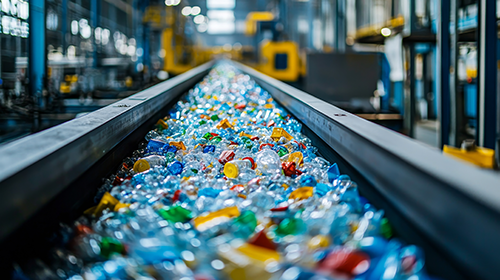
Recycling PET bottles is no longer just an environmental topic; it has become a structural issue for industry. The growth in consumption, combined with the difficulty of properly disposing of plastic waste, demands solutions that go beyond selective collection and responsible disposal.
In this context, industry plays a decisive role: transforming waste into raw material in a continuous, technically viable, and economically sustainable way.
Throughout its history, Trisoft has already reused 6.4 billion PET bottles, incorporating this material into the production of solutions focused on thermal and acoustic comfort. More than a cumulative figure, this volume reflects industrial decisions, technological investments, and a production model based on the circular economy.
This article explains what this milestone represents in concrete terms for the construction sector, industry, and the future use of recycled materials.
The real scale of 6.4 billion PET bottles
Working with numbers of this magnitude requires technical and spatial context. To understand the scale of this volume of reused material, certain equivalences help situate the physical impact of this quantity of PET bottles.
The total of 6.4 billion PET bottles is equivalent to approximately:
- • 40 complete trips around the Earth
- • 4.8 million Eiffel Towers
- • 53.3 million Christ the Redeemer statues
These comparisons are not symbolic or illustrative. They translate an abstract industrial volume into well-known spatial references, helping to understand the real dimension of the material that did not become discarded waste.
From waste to industrial input
Reusing PET bottles on an industrial scale is neither simple nor immediate. The material goes through technical stages involving sorting, processing, and transformation until it reaches the characteristics required for use in new products.
At Trisoft, recycled PET is incorporated into the production of materials focused on environmental comfort, especially thermal and acoustic applications. This process allows post-consumer waste to return to the production chain with a defined technical function and measurable performance.
This model reduces dependence on virgin raw materials and extends the life cycle of plastic, aligning industrial operations with the principles of the circular economy.
Applications in construction and interior design
Material recycled from PET bottles is used in solutions applied across different contexts within construction and interior design. Key applications include:
- • corporate and commercial environments
- • educational spaces
- • restaurants and shared areas
- • residential projects
- • industrial and technical areas
These products directly improve acoustic and thermal comfort, contributing to more efficient, functional, and comfortable environments.
The use of recycled materials in these applications demonstrates that sustainability and technical performance are not opposing concepts but complementary ones when supported by proper industrial development.
The circular economy as an industrial practice
The circular economy is based on waste reduction, resource reuse, and reintegration of materials into the production cycle. In the industrial sector, this requires planning, traceability, and technical capacity.
Transforming 6.4 billion PET bottles into new products indicates a production model that goes beyond isolated initiatives. It is a continuous process, integrated into operations and dependent on structured recycling and supply chains.
This approach helps reduce pressure on natural resources and strengthens the role of industry in solid waste management.
Impacts for architects, engineers, and specifiers
For professionals responsible for material specification, product origin and environmental impact have become increasingly relevant criteria. Choosing solutions that use recycled PET allows projects to align with more responsible practices without compromising performance or durability.
Additionally, the use of recycled materials supports sustainability strategies in corporate, commercial, and institutional projects, responding to growing market and regulatory expectations.

Sustainability applied at an industrial scale
Industrial sustainability is not built on concepts alone, but on volume, repetition, and consistency. Working with billions of reused units demonstrates the viability of sustainable solutions when integrated into production logic.
Trisoft’s experience shows that it is possible to transform waste into technical inputs, creating scalable solutions while maintaining quality and performance standards.
This model reinforces the role of industry as an active agent in the transition to more responsible production systems.
The role of industry in plastic waste management
PET plastic will remain part of modern society for many years. The central issue is not its immediate elimination, but how it is used, reused, and reintegrated into the production chain.
Industrial initiatives that absorb large volumes of waste directly contribute to reducing environmental impacts and creating new usage cycles for materials that would otherwise be discarded.
A milestone that reflects continuity
The figure of 6.4 billion PET bottles transformed does not represent an endpoint. It reflects an accumulated process built over time and still evolving.
Each new project, application, and development expands this impact, reinforcing the importance of industrial solutions that combine technical performance, scale, and environmental responsibility.
Transforming PET bottles into thermal and acoustic comfort solutions shows that recycling can go beyond proper disposal. When integrated into industry, it becomes an active part of building more efficient environments and a more balanced economy.
6.4 billion reused PET bottles represent industrial decisions, technological investment, and a commitment to a more conscious production model.


